

WHO’S THAT LADY ENTERTAINMENT THE NO GOSSIP WEBSITE! 2,000 + Phenomenal Women and Men featured on our website with everyone linked to their website or social network. Easy access for the Fans! Visit our website www.whosthatladyent.com
Tuesday, May 5, 2015
The Furious 5 Mele Mel and Scorpio calls Grandmaster flash the Milli Vanilli of Hip-Hop?

SAD PHOTO! B.B. King Daughter Claims Elder Abuse Police Called in Dispute Over Care

TMZ has learned there's a huge battle over B.B.'s care -- between his daughter Patty King and his longtime manager Laverne Toney. Patty, who lives with her father in Las Vegas ... tells us she wanted to take him to the hospital because his urine was orange and he wasn't eating.
She claims Toney -- who has power of attorney over B.B. -- refused, so Patty called police. Responding officers called in paramedics, who agreed B.B. needed to be checked out by doctors.
89-year-old King was treated at the hospital -- and Patty says he suffered a minor heart attack. She also says this photo was taken during his brief stay, and she hopes the image will convince authorities something needs to be done to protect him.
Patty and her boyfriend filed a police report last November ... claiming elder abuse, and burglary. They accused Toney and her assistant of fleecing $20-$30 million from B.B., withholding his medications while on tour -- and jacking several Rolexes and a ring valued at $250k.
Police are investigating, but no charges have been filed yet.
We've reached out to Toney for comment, but so far no word back. Patty says she's meeting with her attorney to discuss wrestling power of attorney away from Toney.

Why We Must Not Forget Black Women Are Victims Of Police Brutality, Too

McClain recently published a piece in The Nation on the subject, in which she wrote that the Times concluded a "primary outcome of these 'disappeared' men is that black families are set up for dysfunction because too few men are around to be husbands and fathers. Through this lens, the systemic assault on black lives hurts black women because they’re left alone in to raise families on their own."
While she told HuffPost Live's Alyona Minkovski that the article was "fascinating and very important reporting," its conclusion is "problematic and quite short sighted" for implying that black women are "secondary casualties" of aggressive policing and racially-targeted criminal justice policies.
"It would imply that black women, ourselves, are not often victimized at the hands of officers, are not, ourselves, targeted by certain policies," McClain said, raising the case of Rekia Boyd, a young black woman killed in 2012 by an off-duty police detective in Chicago who was recently acquitted on all charges.
"What's interesting is that Rekia Boyd is not a household name the same way that Freddie Gray [is], in the same way Michael Brown [is], in the same way that Tamir Rice is," McClain said.
While McClain wrote in The Nation that black men are "more often victims" in the cases of police abuse, she told HuffPost Live that it's not a competition.
"Black communities as a whole, we are faced with challenges, and so it doesn’t need to get into this kind of tug of war about who’s suffering more," she said.
TO READ MORE CLICK http://www.huffingtonpost.com/2015/05/01/targeting-black-women_n_7184578.html?utm_hp_ref=black-voices
Morgan Freeman Blasts Baltimore Coverage: 'F*** The Media'

Morgan Freeman has three words to describe the coverage surrounding last week's protests in Baltimore, Maryland: “F*** the media.”
During a recent interview with The Daily Beast, Freeman candidly expressed his thoughts on the unrest that has unfolded in the city since the passing of Freddie Gray. The 77-year-old actor said he was dissatisfied with the news reports that were released in the days following Gray's death and blasted the coverage produced by several major media networks.
“Look at MSNBC, Fox News, and CNN. Go between those three,” Freeman said. “There’s a take, there’s a take, and there’s a take. It’s just commentary. CNN wants to be pure news, but the others are just commentary. They’re just commenting on things.”
Despite his criticisms, the Academy Award-winner did credit the media for the improvement he feels they've made since last year’s coverage over the death of Michael Brown in Ferguson, Missouri. Particularly, Morgan took issue with the national conversation over Brown's killing, which seemed to focus on allegations that the 17-year-old had robbed a convenience store prior to being fatally gunned down by former police officer Darren Wilson.
“Now, they’re getting more of the whole picture. Ferguson? No,” the actor admitted. “Baltimore seems to be coming up with a different scenario in the background. People are saying, ‘You were not all there when we were just talking and trying to make a point, but if we set something on fire, all of a sudden you’re all here.”
“Why is that? What’s the difference?’ And some young reporters are listening. That sort of observation is very useful.”
Freeman’s disapproval of the media’s coverage in Baltimore adds to the growing list of public figures who have expressed similar sentiments, including comedian Larry Wilmore, who blasted Fox News for its “racial approach” in reporting last week’s clash between police and protestors.
Read more of Morgan Freeman’s Daily Beast interview here.
Saturday, May 2, 2015
Interview With Baltimore Filmaker Derick Thomas New Films Murderland and Raising Wolves
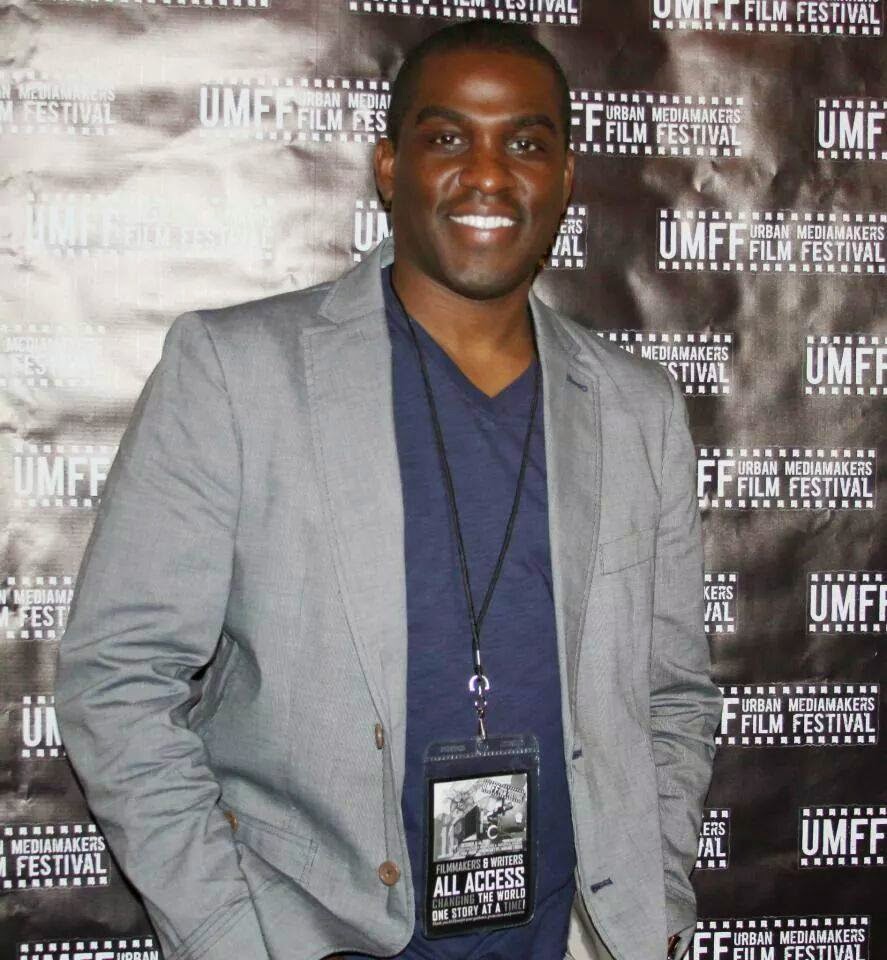
BALTIMORE'S VISIONARY OF THE AFRICAN AMERICAN MALE
By Belinda Trotter-James
Derick always wanted to be a filmmaker. As a kid he was inspired by the actor Robert Guillaume; you may best know him on the hit television show Benson. At the age of six he has always been a fan of television and it just unfolded into the filmmaking business when he was a teenager. That’s when he finally got a chance to explore all aspects of filmmaking. “At the age of six there were not a lot of us on television and television influences children which is one of the reasons why we have so many bad influences today, but that’s another story,” says Derick. “Robert Guillaume was intelligent, articulate, he had power, he had persuasion plus he was the guy who had everything and at six years old I watched him and thought, ‘I can do that.’ He was just a great role model for that time.”
When I asked what was he like as a child, he laughed and responded, “I would say as a kid I was not mischievous or a bad kid; I think I was more insightful and quiet. I guess I’m the same way today, but I think I was just a regular boy. My mother would tell you that I was high energy. I wouldn’t just walk down the street with her; I would be doing a cartwheel down the street beside her. She always thought I was full of energy and everybody always thought I was crazy wild. I was always doing something and making funny faces. I was always the clown in the house.” Derick swears it wasn’t sugar that kept him bouncing off the walls. “I think it was just my personality,” recalls Derick. I had a lot of fun with all my girlfriends. I could always make them laugh. I don’t let the world see that side of me; only the women in my life get to see that because they are close to me.”
 Derick was born and raised in Baltimore so he gets to see first hand all the riots and anger from the residents because of the injustices taking place in that area and in various cities around the world. He is not too far from the action. “Actually the house I purchased with my mother years ago is right around the corner from the mall,” says Derick. “She was concerned because she still lives there.” Derick reveals that the area is not a bad area however, the concerns of the people are about the haves and the have-nots. “Kids would have fights all the time for years and it never made it to television,” says Derick.
The general atmosphere of the situation in Baltimore is that society has given up on them and would like to see them disappear one by one. When the world shows you that they, the powers that be or whoever don’t care about you, then the world becomes a stranger or even the enemy. When one starts to feel that everyone around them is the enemy, then the world becomes a dangerous place.
“What’s happening with the kids in Baltimore is that they have had enough of seeing their brothers being shot down,” says Derick. “Kids don’t think about the consequences like adults do. They react emotionally to what’s happening in the world and kids can see injustice. All these things that are happening in Baltimore were started by high schoolers. They were the ones who organized it. The story is that the police was monitoring the kids before they got out of school to prevent rioting, marching or whatever and the police were getting prepared. But if you notice the kids did not riot for Trayvon Martin, they didn’t riot for Eric Garner and you have to wonder why they weren’t rioting. Why? Because they have seen national news again and again and again with incidence after incidence of what seems to be these white police officers who have been sworn in to serve African Americans killing unarmed black men and it rings of injustice to these kids and they are not having it. They are not having it in Ferguson and they are not having it in Baltimore. It was a powder cake ready to explode. They have had enough and it was the children who started this.”

There is a common theme to Derick’s films that is relatable to the things that are happening in the streets of Baltimore that can be seen as marginalized, disenfranchised grief. “You’re talking about young boys who are on the verge of becoming men and basically they have been locked out of society,” says Derick. “I’m a black man who grew up in this city and I’ve experience different instances of racism. If you’re a black man in this country, you will experience racism. Chris Rock has been pulled over three or four times. So when you have young men in this city, they can’t get jobs because maybe people don’t like the way they dress, the way they look, the way they sound or think that they are a threat or will rob them or steal and don’t want to hire them and for the most part these kids are not getting jobs. They’re struggling out there and they are falling off by the wayside. The producer of The Wire, David Simon said it best when he said, ‘You’re talking about a system that doesn’t need them.’ So you have a lot of inner city people who are falling in the cracks of America.”
Most of Derick’s films deal with this very issue of youth who feel marginalized and disenfranchised or very close to it. His first film in 2006 was Charm City, which is about the epidemic of the older black men in America who are trying to lift themselves up in challenging situations. Raising Wolves deals with the problems in the African American community, Blue Light City is a cop drama that deals with gang culture and corruption and how power corrupts everyone eventually. “My films are about the black male experience. Charm City is about the older black male experience. Raising Wolves is timelier because it talks about a few problems in the African American community. You have youth that are fallen to the wayside and are following in the footsteps of the older men or trying to make money by selling drugs and trying to find ways to survive and they have dreams, but they don’t necessarily know how to pursue those dreams. You also have a climate of homosexuality and women are taking the male roles, which is really interesting. That’s a whole different story. We did not concentrate on that, but we did show that there is a development of a strong force of women who have taken on male roles in African American families.”
This is not the generation of kids we saw years ago. “In Raising Wolves the kids are more smarter, they are more intelligent, they are less fearful and more fearless and are willing to do what it takes to get their point across and you saw that with the riot and they were not afraid of the police,” explains Derick. “One thing you realize is that those kids learned from those in the Middle East not to be afraid of the police. That was classic behavior they learned from watching the news; their anger against the police… They learned how to do that from the news and television when they were rioting.” I did notice people throwing bottled water. We don’t have many dirt roads with an abundance of rocks therefore, bottled water or whatever they could find is their choice of weapons.
Even though Derick’s films have common themes of life in the hood and the struggle to survive they are not loosely based on his life. “No, I’m a good boy,” laughs Derick. “I just watched from a distance. I always told my mother I was there just to be a reporter and observer. God put me in that place to watch. I’ve always known I was going to make movies one day. It wasn’t any surprise to me what I was doing there. I knew I was there to learn. There were oftentimes where I would be mischievous, but I learned how to have a rough edge being in the hood. It was good learned behavior because some of the people or personalities I have in my film, I have come across. Stories that I’ve heard I’ve never been involved in any of those activities of the hood, but I heard and learned and seen so many things that it’s been easy for me to write these stories.”
Since 2006 Derick has been producing films through his company Da Vision Pictures. In today’s world some feel it’s their mission to document the world in which they live or the world they see. Some people always want to slap the title of mentor, role model, or duty to society on the backs of society’s creators. On the other hand the artists or creators feel it’s just a form of how they express themselves with no expectation. They just do what they do because they love it. “I don’t know if it’s our duty, but it most certainly seems to be more of a serendipity feeling as if you were placed here to be a voice for that era,” says Derick. “They say that one of Jay Z greatest assets is that he was able to give you an eye into that hood life and made it more relatable to everybody and I think that’s what key artists do. It’s like they have some way of being able to share their voice and give you the ability to be able to see their perspective of their experience in a unique way that really resonates with people. So to a certain extent I would say it’s like a God given opportunity; almost like you were ordained to tell that story.”
“You are more immensely powerful than what you think,” says Derick. These were golden nuggets of wisdom given to a group of school children when Derick was asked to give some words of encouragement. “That is not just for the youth,” explains Derick. “Its for every one and all the worries of the world really don’t hold a hell of beans to the amount of focus that can turn your life around in a matter of seconds if you were to give it all to an idea or a mission. I think the youth especially have a great amount of enthusiasm, energy and they have a future and we don’t want them to waste it getting involved in activities that can some how change their future. We want them to be great citizens of this great society to contribute and give back and the only way they are going to do that is to find something they are passionate about and pursue their goals, dreams, desires and really take a hold of their life and the only way they are going to be able to do that is to find someone to show them how to do it. And I think that’s where we come in… schools come in, teachers come in. If I didn’t have the ‘village’ to step in at different moments of my life to steer me in the right direction...” Derick stopped short of finishing his sentence however, each one of us reading this can add hundreds of our own endings to his sentence.
“Jon Stewart said Baltimore was burning long before the riots began and he was absolutely right. It’s a shame that it took a riot for people to see the disenfranchise… the baggy pants, the out of work youth stuck home with his mother and you hear comments from other races who call them monkeys and savages because they are out there rioting. They are out there rioting because they feel hopeless. Not only are they being killed, but also they are in a world where people are showing them that they don’t give a damn about them or their lives. I always tell people that the most dangerous word in the world is….. inequality. That label has been slapped on African American men around the world. When you look at us across the board… across the planet, we are in a dire situation. We are in a rough spot when it comes to trying to mobilize our youth in Baltimore city. They need jobs, they need training, they need to be nurtured, they need to be loved and it’s a systemic problem when you have out of work, unemployed African American men that are untrained for no workforce. It’s not everybody, but it’s enough of them where it’s causing a problem. They are rioting because the police are shooting unarmed black men across this country and people are tired of it. The rioting and looting continues because of the disenfranchise of the situation. People want to know why are you looting in your own neighborhood? Well white people loot in their own neighborhood. White people don’t come into African American neighborhoods to riot. When white people riot, they riot in their own neighborhood. When black people riot, they riot in their neighborhood. White people don’t come in black people neighborhoods and black people don’t go in white peoples neighborhood to riot. It would be a race war if that happened.”
 “They are trying to get a leg up and they don’t care if it’s a free soda. Of course there are opportunist out there. We know it and recognize it, but at the end of the day there are opportunities where people will take advantage of all types of situations. At the center of it all we are talking about out of work, unemployed, disenfranchised people who feel this society and system is unfair and don’t care about them so they rebel. As terrible as this whole situation looks, it may be transformative. The government may have to take a look at this and say what can we do to prevent this because it’s a powder cake that’s getting ready to explode.”
Derick is a part of a canvas that creates a way people can understand each other through film. Filmmaking allows stories to be told to a captive audience who must sit and listen without being interrupted by anger, fear, sadness, hopelessness and any other negative emotional feeling that comes to mind. Derick enjoys being the storyteller and collaborating with other creative people. “The most wonderful thing of it all is when you can take someone and put them on film and then watch them look at themselves. You can see them see themselves in all of their glory. That makes my heart smile. I’ve done that so many times in my life. I get joy out of seeing people see their dreams come true. It’s wonderful to see people in all their glory!”
Yes, it’s a light bulb moment. Fans can find Derick A. Thomas of Da Vision Pictures and his films in stores and on various social networks … instagram.com/davisionpictures and http://www.twitter.com/DerickAThomas
All rights reserved -- no part of this website may be reproduced or transmitted in any form or by any means electronic or mechanical including photocopying, recording or by any information storage and retrieval system without permission from Who's That Lady Entertainment.
All rights reserved -- no part of this website may be reproduced or transmitted in any form or by any means electronic or mechanical including photocopying, recording or by any information storage and retrieval system without permission from Who's That Lady Entertainment.
Friday, May 1, 2015
R.I.P Ben E King: R&B legend dies at 76 "STAND BY ME"

R&B and soul singer Ben E King, best known for the classic song Stand By Me, has died at the age of 76.
King
started his career in the late 1950s with The Drifters, singing hits
including There Goes My Baby and Save The Last Dance For Me.After going solo, he hit the US top five with Stand By Me in 1961.
It returned to the charts in the 1980s, including a three-week spell at number one in the UK following its use in the film of the same name and a TV advert.
King's other hits included Spanish Harlem, Amor, Don't Play That Song (You Lied) and Supernatural Thing - Part I.
The singer died on Thursday, his publicist Phil Brown told BBC News.
Fellow musician Gary US Bonds wrote on Facebook that King was "one of the sweetest, gentlest and gifted souls that I have had the privilege of knowing and calling my friend for more than 50 years".
He wrote: "I can tell you that Ben E will be missed more than words can say. Our sincere condolences go out to Betty and the entire family.
"Thank you Ben E for your friendship and the wonderful legacy you leave behind."
BBC Radio 2 DJ Bob Harris said on Twitter: "So sad to hear that Ben E King has passed away. More than almost anyone, he fired and inspired my love of music. #StandByMe #ThereGoesMyBaby."
Actor Jerry O'Connell, who played Vern in the film Stand By Me alongside River Phoenix and Corey Feldman, tweeted: "You know you are good when John Lennon covers your song. Ben E. King was a wonderful and immensely talented man."
Born Benjamin Earl Nelson, he initially joined a doo-wop group called The Five Crowns, who became The Drifters after that group's manager fired the band's previous members.
He co-wrote and sang on the band's single There Goes My Baby, which reached number two in the US in 1959.
His first solo hit, in 1961, was Spanish Harlem, which was followed by Stand By Me.
He originally intended Stand By Me for The Drifters, but said they turned it down. So he worked on the song when Atlantic Records boss Ahmet Ertegun paired him with writers Jerry Leiber and Mike Stoller.
'Classic' voice
"In my vocal I think you can hear something of my earlier times when I'd sing in subway halls for the echo, and perform doo-wop on street corners," he told The Guardian in 2013."But I had a lot of influences, too - singers like Sam Cooke, Brook Benton and Roy Hamilton. The song's success lay in the way Leiber and Stoller took chances, though, borrowing from symphonic scores, and we had a brilliant string arranger."
The song went on to chart nine times on the US Billboard 100 - King's version twice and seven times with covers by artists like John Lennon and Spyder Turner.
It was also the fourth most-played track of the 20th Century on US radio and TV.
Earlier this year, the US Library of Congress added it to the National Recording Registry, declaring that "it was King's incandescent vocal that made it a classic".
Stand By Me, Spanish Harlem and There Goes My Baby were all named on the Rock and Roll Hall of Fame's list of 500 Songs that Shaped Rock and Roll, and were all given a Grammy Hall of Fame Award.
TO READ MORE CLICK HERE http://www.bbc.com/news/entertainment-arts-32547474
6 Baltimore Police officers charged in Freddie Gray's death

During a stirring press conference, Marilyn Mosby, the whose family has five generations of police officers, said the six officers illegally arrested Gray and then failed to get him the medical help he clearly needed after they arrested him.
She charged Caesar Goodson Jr., the officer driving a transport van in which Gray riding with the harshest crime, second degree depraved heart murder, a charge for an action that is considered to demonstrate a callous disregard for human life. It carries a sentence of up to 30 years in Maryland.
She charged the other officers with involuntary manslaughter, assault, failure to render aid and misconduct in office.
TO READ MORE CLICK BALTIMORE -- In a momentous decision that may shape future relations between police and residents in Baltimore, the State's Attorney on Friday announced she would file charges against six city officers she says are responsible for the death of Freddie Gray. During a stirring press conference, Marilyn Mosby, the whose family has five generations of police officers, said the six officers illegally arrested Gray and then failed to get him the medical help he clearly needed after they arrested him. She charged Caesar Goodson Jr., the officer driving a transport van in which Gray riding with the harshest crime, second degree depraved heart murder, a charge for an action that is considered to demonstrate a callous disregard for human life. It carries a sentence of up to 30 years in Maryland. She charged the other officers with involuntary manslaughter, assault, failure to render aid and misconduct in office.
Subscribe to:
Posts (Atom)